OS 【Open Seminar I 】Market Trend – SiPh/CPO Heterogeneous Integration in the AI Era: CoPoS × TGV
Oct. 20, 2026 14:00 PM - 16:05 PM
Room: TPCA Show Main Stage (Area L, 4F, TaiNEX1)
Session chair: Albert Lan, Applied Materials
Advanced Packaging Market Trends and the Path Toward CPO
發表編號:OS-1時間:14:00 - 14:25 |

Invited Speaker
Speaker: Gabriela Pereira, Senior Technology & Market Analyst – Semiconductor Packaging, Yole Group
Bio:
Gabriela Pereira is Senior Technology & Market Analyst, Semiconductor Packaging at Yole Group. Working within the semiconductor packaging activities at Yole Group, Gabriela focuses on advanced packaging platforms, develops technology & market reports, and is engaged in dedicated custom projects. Gabriela’s experience in the semiconductor field includes working at Amkor Technology, first for her master’s thesis and then as an R&D Engineer. Gabriela holds a master’s degree in metallurgical and materials engineering from the University of Porto, Portugal.
Abstract:
The semiconductor industry is being reshaped by megatrends such as AI, high-performance computing, cloud infrastructure, 5G, automotive electrification, and others. These applications are driving increasingly demanding system requirements. As front-end scaling becomes more challenging, the industry is turning to system-level scaling, positioning advanced packaging as a critical enabler.
This presentation will provide an overview of the advanced packaging market, which is forecast to grow with a CAGR of more than 12% in the next five years, driven by strong adoption of 2.5D/3D packages for AI and HPC applications. It will then explore co-packaged optics as a key emerging architecture for next-generation data-center networking, where optical engines are brought closer to switch ASICs to reduce electrical interconnect length, lower power consumption, and increase bandwidth density.
A deep dive will address the packaging technologies enabling CPO, from EIC/PIC integration using 3D stacking, hybrid bonding, and fan-out approaches, to system-in-package (SiP) assembly roadmaps moving from FCBGA substrates toward 2.5D interposers, photonic interposers, and other heterogeneous integration platforms. The presentation will also review market examples such as NVIDIA Quantum-X, discuss the potential role of panel-level packaging for larger CPO modules, and map the emerging supply chain involving foundries, IDMs, OSATs, and ecosystem collaborations across optical engine and CPO assembly.
|
|
The Silicon-Photonics Roadmap for AI Scaling: From NPO to 3D CPO Package Total Solutions
發表編號:OS-2時間:14:25 - 14:50 |
Invited Speaker
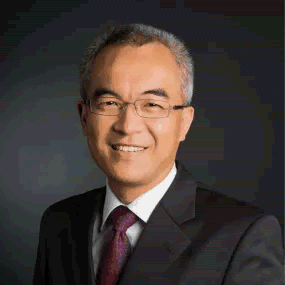
Speaker: Scott Chen, Senior Vice President, ASE Inc.
Bio:
Education:
Master of National Taiwan University (NTU) Executive MBA Program
B.A.of Chemical Engineering at NTU
Experience:
Sr. VP of Central Development Engineering in ASE since 2015
Staff Engineering Manager at Motorola Electronics Taiwan. (1999)
Process Engineer in Texas Instruments Taiwan.
Vice Chairman of MEMS Committee , Taiwan Semiconductor Industry Association (2013-2014)
Supplier-chain committee Chair of HiSPA ( Heterogeneously Integrated Silicon Photonics Alliance ) since 2024
Abstract:
Driven by generative AI and Large Language Models (LLMs), chip-to-chip communications within AI clusters are facing severe bottlenecks due to the "I/O Power Wall" and thermal limits. Traditional pluggable optical modules can no longer meet the demands for ultra-high bandwidth, low latency, and extreme power efficiency required at 1.6T/3.2T data rates and beyond.
This presentation provides a deep dive into the evolutionary roadmap of optical interconnects—transitioning from Near-Packaged Optics (NPO) to Co-Packaged Optics (CPO)—and outlines the timeline for commercial deployment. We will focus on next-generation Optical Interposers and 3D heterogeneous integration technologies, demonstrating Bonding between Electronic Integrated Circuits (EICs) and Photonic Integrated Circuits (PICs) eliminates parasitic capacitance. Furthermore, addressing the critical manufacturing challenges of large-die packaging, we present a comprehensive Package Total Solution encompassing warpage control, advanced thermal management, high-precision passive optical alignment, ..etc to enable the next wave of AI infrastructure.
|
|
Panel-Level Scaling and Glass Core Integration for the AI Era
發表編號:OS-3時間:14:50 - 15:15 |

Invited Speaker
Speaker: Gang Duan, Executive Vice President, SEMCO
Bio:
Dr. Gang Duan is an Executive Vice President at Samsung Electro-Mechanics, leading packaging substrate application engineering and technology marketing for US customers. Previously, he was a Senior Director and Senior Principal Engineer at Intel Foundry, pioneering advanced packaging technologies like EMIB, EMIB-TSV, glass substrates, RDL/TSV-Bridge PLP, and panel-level assembly. A prolific innovator, Dr. Duan holds over 350 US patents (600+ worldwide) and has published more than 50 technical papers with over 5,500 citations. He earned his Ph.D. in Materials Science and his M.S. in Electrical Engineering from California Institute of Technology (Caltech).
Abstract:
Scaling AI workloads demands unprecedented bandwidth, shifting high-performance computing to heterogeneously integrated architectures. This presentation explores how panel-level scaling and glass core substrate integration leverage packaging innovations to overcome constraints in power delivery, I/O scaling, signal integrity, and mechanical reliability - essential pathways for building tomorrow’s robust AI infrastructure.
|
|
Challenges and Solutions for testing Electro-Optic Devices Driven by AI Datacenter Applications
發表編號:OS-4時間:15:15 - 15:40 |

Invited Speaker
Speaker: Jeff Arasmith, Director, Corporate Marketing and Business Development, MPI Corporation
Bio:
Jeff Arasmith has been with MPI Corporation for a little more than a year as a Director of Marketing and Business Development. Jeff started in this industry in 2000 as an applications engineer at Cascade Microtech. His focus for these 25 years has been on RF probing at the wafer level. Jeff received his B.S. in Physics from Oregon State University the same year that international roaming became available on 2G cellular networks. Jeff has been a presenter or co-presenter at SWTest, SWTest China, and TestConX many times.
Abstract:
AI-driven datacenter infrastructure is fueling unprecedented growth in photonics-based applications, where scaling governed by Moore’s Law is no longer applicable. Current deployments support data rates of up to 400 Gb/s per optical channel, while R&D efforts targeting 800 Gb/s per channel are showing promising results. This evolution is paving the way toward the ultra-high bandwidth required for latency-free AI workloads, targeting a bandwidth of 12.8 Tb/s. Previous generations of electro-optic circuits have proven too power-hungry to efficiently support the scale of AI infrastructure, driving the development of a new generation of E-PIC devices incorporating shared, multi-channel optical emitters. This is where co-packaged optics (CPO) becomes a critical, enabling technology. The adoption of CPO represents a significant innovation in addressing the bandwidth, power, and density requirements of these next-generation AI systems. At the same time, however, it introduces substantially greater test complexity. Test flows now involve more insertion points, simultaneous optical and electrical measurements, and significantly more demanding mechanical configurations. Optical and electrical interfaces may be located on the same side, opposite sides, or perpendicular sides of the device under test (DUT), creating new challenges for alignment, probing, handling, and automation. This presentation will review the mechanical, electrical, and optical requirements of test insertions 1, 2, 3, and 4 and will relate many of these challenges to solutions available from MPI Corporation.
|
|
Passive Optical Connectivity for CPO Systems
發表編號:OS-5時間:15:40 - 16:05 |

Invited Speaker
Speaker: Andy Teng, PCS Systems Engineering Lead, Corning Optical Communications, Corning
Bio:
Andy Teng has been working in Corning since 2014 to support different glass applications from semiconductor glass to Gorilla Glass. His current role is to support CPO deployment for Taiwan customers using Corning’s solutions as a system engineer.
Abstract:
Passive optical connectivity plays a critical role in Co-Packaged Optics (CPO) architectures by addressing key system requirements. Corning’s comprehensive passive optical connectivity solutions support customers in the design, deployment, and manufacturing of CPO systems
|
|
|